‘In making the work, I remake myself’: An Interview with Textile Artist Jenny McIlhatton
Jenny Mcllhatton reflects on her journey from the fashion industry to participatory art, and on the importance of community, touch, and visible repair in her practice


Jenny McIlhatton is the next facilitator in Looking Forward’s Community Engagement programme Soft Ground, hosted at SET Social Peckam every Friday, 2 to 4 pm. She plans to lead workshops using fashion waste, focusing on simple stitches and sensory experiences to create an inclusive environment where participants can connect through art.
Sylvia Keck-Soler: How would you describe your work in your own words?
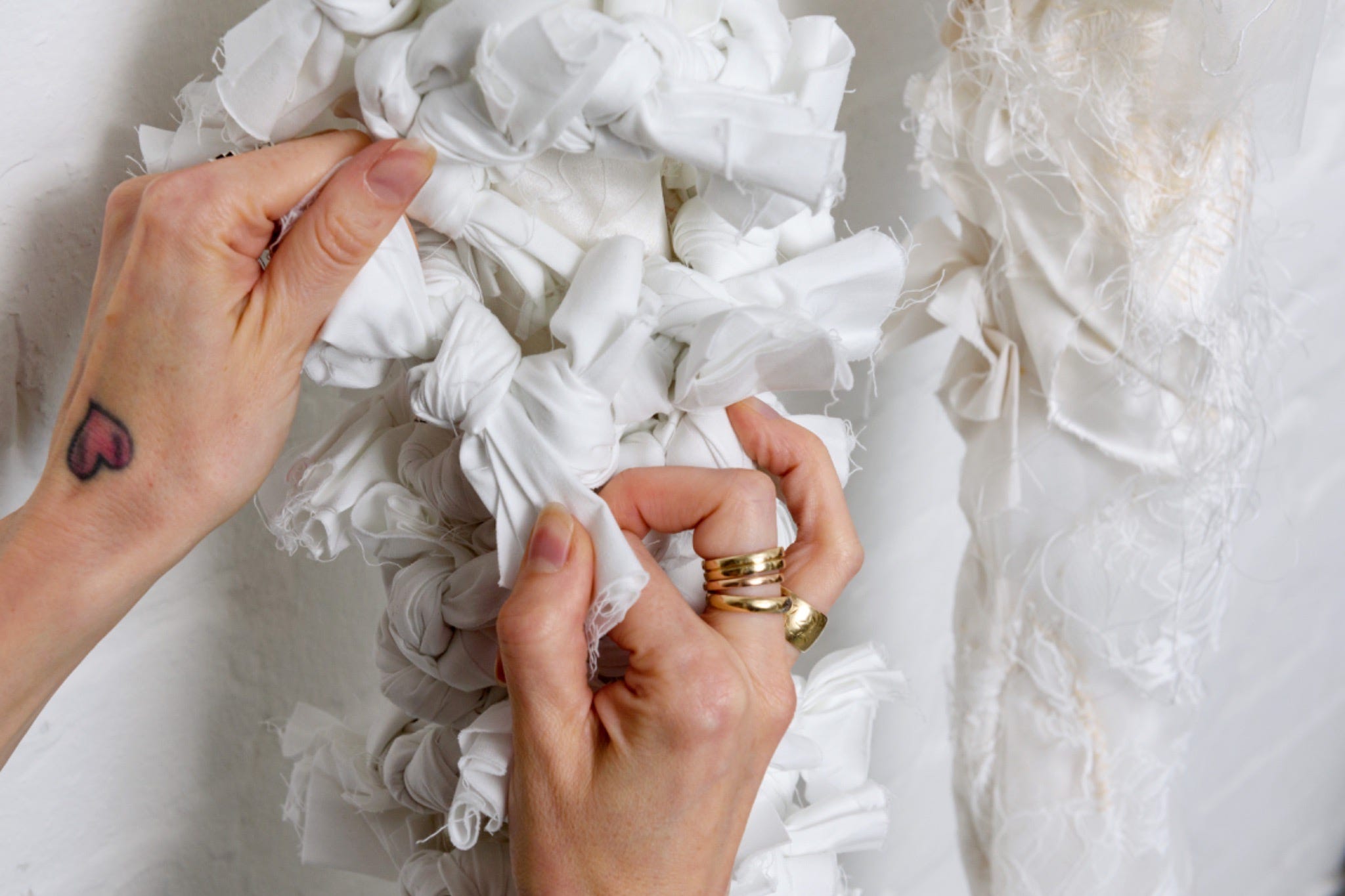
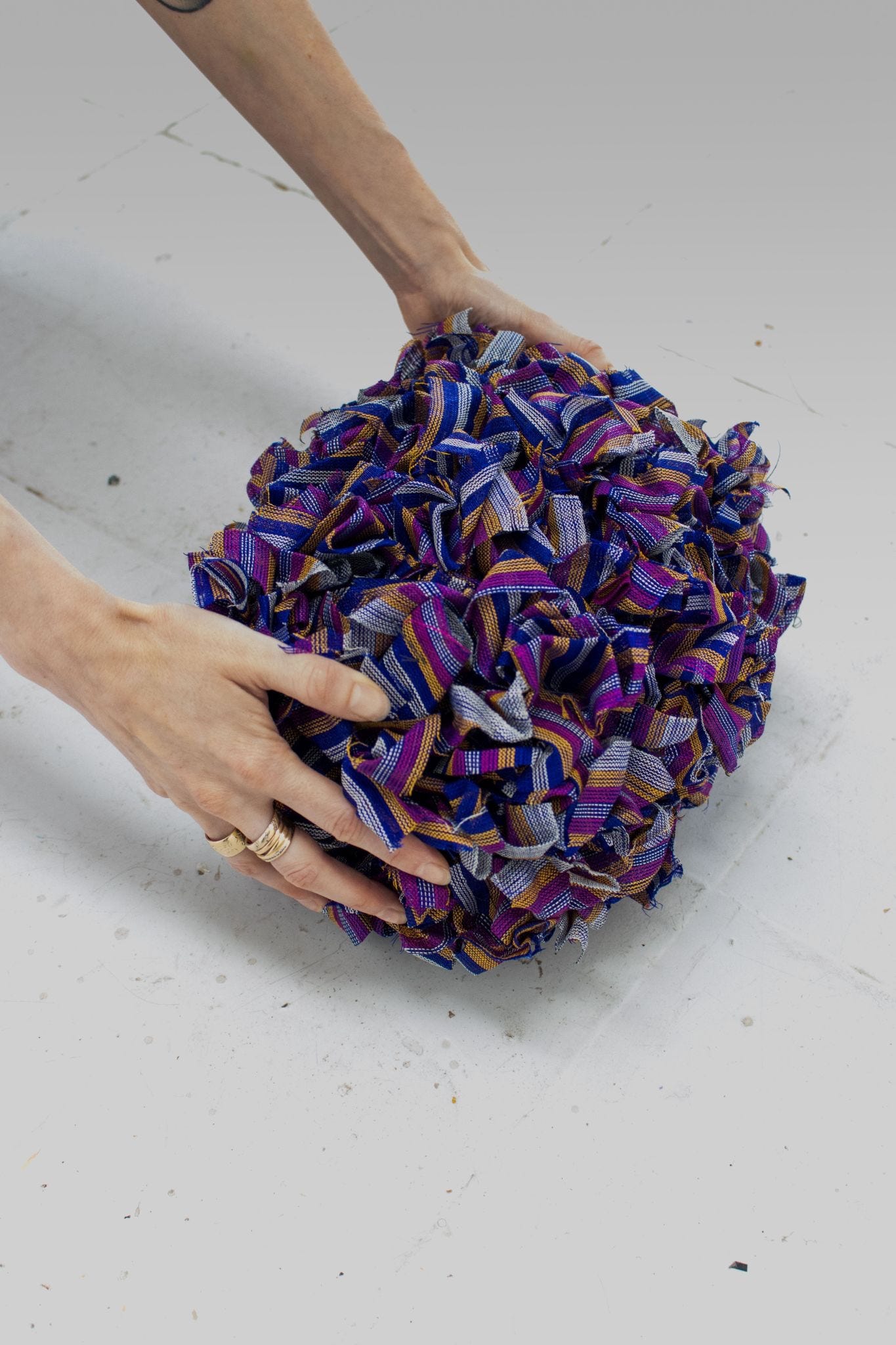
Jenny Mcllhatton: I’m an interdisciplinary artist specialising in textiles. I see my work as a connective bridge, a conversation between the artist and the viewer. Using meditative hand processes such as stitching, knotting and weaving, I create interactive works that come alive through touch, movement and shared presence within a space.
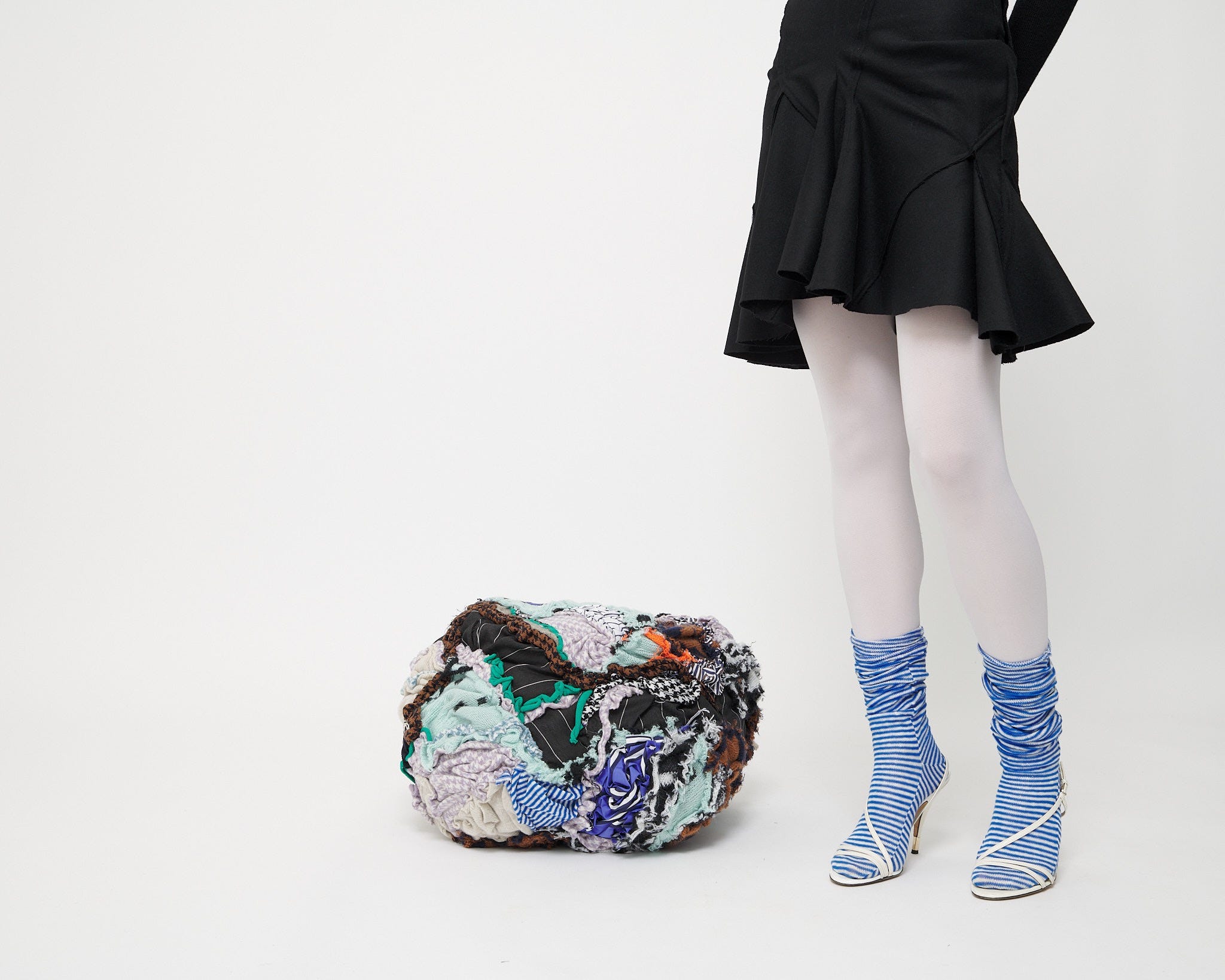
I also make participatory sculptures that are, in a sense, unfinished objects. People are invited to engage with my making process and complete the work. About 98% of what I work with is material that would otherwise go to landfill, fashion waste collected from alteration services and designers’ studios. I’m interested in this idea of taking something discarded and transforming it into something beautiful.
SK: You previously worked in the fashion industry. How did you transition from that world into a more artistic practice?
JM: The two worlds definitely feed into each other. I’ve always been deeply passionate about textiles. Since childhood, the way I dressed felt like a kind of armour, a way of creating confidence, putting on a different persona. Fashion was always very tied to my identity.
I worked in the fashion industry for many years and loved it. I made so many things for other people. Gradually, through my own therapeutic process, I began to want to make something for myself. That really started when my therapy was ending, and I wanted to replace those weekly sessions with a commitment to doing something just for me, which became artwork. Textiles were what I had to hand, and what I’ve always felt confident with, so they became my medium.
There’s a lot of crossover between fashion and the kind of participatory, tactile artworks I make. If you think about a dress or an outfit, it’s only activated when someone wears it. I’m fascinated by that activation; it’s similar to how an artwork becomes something different when people touch or interact with it.
I often feel I’ve done my job if someone really wants to touch the work.
SK: How do you bring that participatory element into your exhibitions?
JM: In 2025, I had a show with a participatory sculpture that involved a desk, a chair, and a small set of instructions on cards. Visitors were invited to sit down, read the instructions, and then stack textile triangles, some fixed, some loose, in a kind of deconstructed quilt.
The action is very simple and repetitive, and reflects my own process, these kinds of ritualistic, small, repeated gestures that become a kind of meditation. I wanted to invite people into the feeling I have while I’m making the work. With their permission, I also filmed them as they engaged with the piece.
It was really interesting to observe the visitors approaching it. Children were excited to touch everything, because they’re so used to being told ‘don’t touch’ in art spaces. Adults were often more nervous. Some people carefully reorganised the entire thing so everything lined up perfectly. Even in a tiny, simple action, you can sense someone’s personality, and that, for me, is the conversation between that person and me - how they approach the work, what they get from it, how it makes them feel.
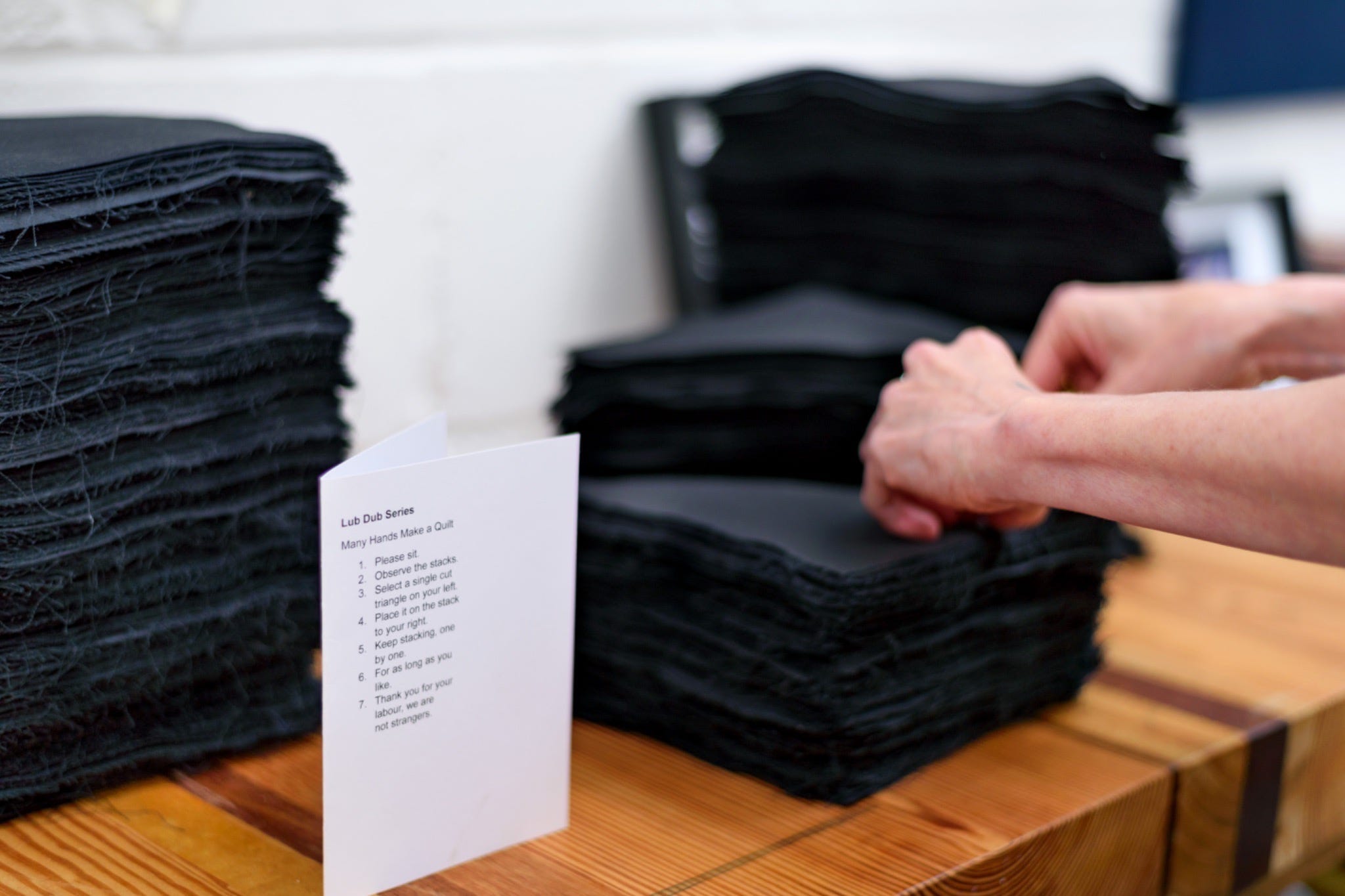
Lub Dub; Many Hands Make a Quilt, 2025, recycled face masks and thread
SK: And I guess textiles are a natural fit, as they’re such a sensory medium. When I look at your work, it feels both very sensual and visually compelling. How does this tactility inform your approach?
JM: I often feel I’ve done my job if someone really wants to touch the work. That’s when you know you’ve drawn someone in. In traditional galleries and museums, you see these beautiful, precious works of art, but there’s this barrier, sometimes literally, with ropes or glass. Of course, you can connect visually, but there’s another kind of connection that comes from touch, and from being allowed to touch.
I think a lot about how people exist in artistic spaces, and who is welcome there. I grew up somewhere without art galleries or museums, and I didn’t go to those spaces as a child. Later, I often felt nervous or out of place in them. So part of my commitment as an artist is to make work that makes everyone feel welcome, even if they don’t have that early exposure to art institutions. The use of textiles is part of this too, we wear clothes and sleep in sheets, there is a sensory familiarity with textiles that most people may not have with oil paint or marble.
SK: That’s great - and very true. But it also makes me think about the space itself, which needs to feel welcoming as much as the work does, right? That’s why we started these workshop programmes in community centres and places that feel a bit warmer than galleries or museums.
JM: And that’s also why I make installations, almost like a room within a gallery. For instance, I once made a piece that curtained off a small section of a gallery. People were invited to step through the textile curtain, physically coming into contact with it. Inside that smaller space, there was an audio of a poem. So even if the larger white-walled space felt unfriendly, I could create a kind of sanctuary within it, something that felt safe and intimate. I see that as part of my job: to carve out spaces where people feel they can belong. This work was part of a special project developed in conversation and collaboration with the indigenous Kalandang (Peace) weavers from the Philippines. It was funded by the British arts council in the Philippines and the forest preservation society. The artworks were exhibited in Portugal, London, Manila and in the village of the weavers. It was such an honour and incredibly inspiring to work with artisans who live and work in harmony with the forest. While producing the incredible sustainable, traditional textile that I got to work with and although are lives are incredibly different, we shared an understanding of juggling the commitment to creativity with other demands on our time.
Part of the collaboration project with the Kalandang (Peace) weavers from the Philippines, above is from the London exhibition and below from when the art works were taken back to the village of the weavers.
Damage doesn’t need to be hidden: repair can be visible and beautiful.
SK: You’ve been addressing this more or less implicitly through this idea of belonging, which feels like a good transition to my next question, one I usually ask in this interview series. Would you describe your work as socially engaged, especially in the context of Looking Forward as a social justice–oriented curatorial platform?
JM: Yes, I do. Since I started making art I’ve worked with a few different charities, End Violence against Women, Papyrus (Youth suicide prevention) and with Labour Behind the Label, which supports garment workers’ rights globally - especially during lockdown, when many factories in the Global South weren’t being paid by brands, and workers, often women with families, were left in really precarious situations. Coming from fashion, that felt especially important to me.
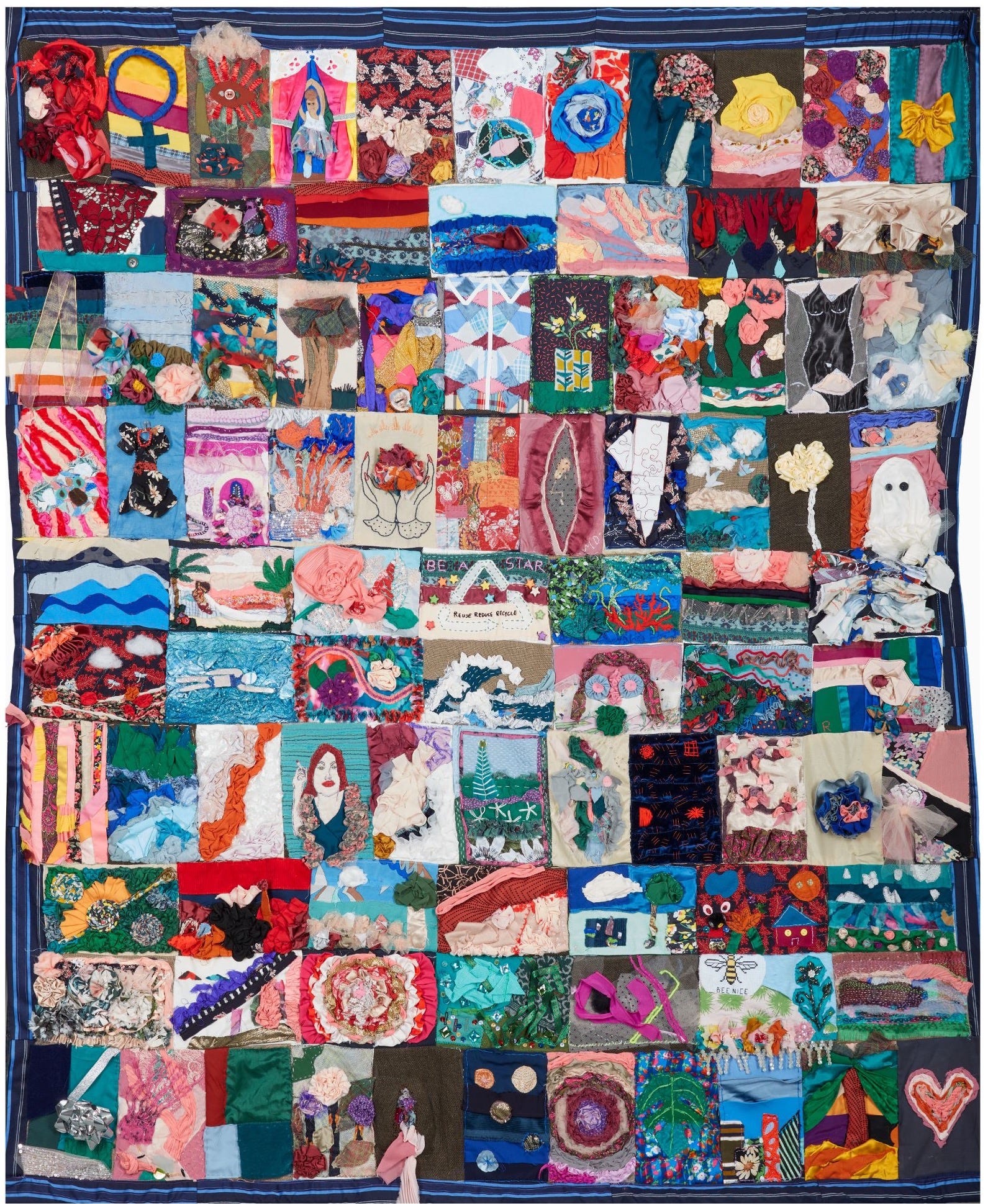
During lockdown, I ran a community textile project. I mailed out packages of textiles and, over Zoom, guided participants through ways of making small works, similar to the workshops I’ll be leading. Teaching someone to thread a needle over Zoom is… challenging, to say the least! But people were at home, many feeling lonely, and this gave them a chance to make something. About 95 people took part. They made small works, sent them back to me, and they became part of a community quilt. Often, they included letters describing what the making meant to them, their experiences during lockdown, and how they were feeling. I suddenly felt like a custodian of all these stories and this moment in time.
That experience really confirmed for me that community work is integral to my practice. I believe there’s an artist in everyone. Whether someone works in an office, is retired, or is a child, everyone should be encouraged to make. It’s good for the soul! That’s why I love leading workshops. I don’t see myself as a teacher so much as a facilitator - I can demonstrate techniques, but people will always approach them in their own ways. I often learn as much from beginners as they do from me. It’s always an exchange.
SK: Yes, I really relate to that thing of facilitating and receiving stories, we’ve been seeing a lot of that with Soft Ground. Just seeing how the materials and the flexible teaching has been encouraging people to share their stories among each other, even intergenerationally - people that wouldn’t interact otherwise. And the stories they share, it’s almost like a little novel in real life.
JM: It makes me think of the history of women and textiles, something I’m quite fascinated with - women gathering to recycle fabric, make quilts together, tell stories, and pass skills down to younger generations. Quilts were often gifts for big life events, weddings, babies, so they carried personal and communal meaning. We’re very connected digitally now, but I think we’re far less connected in that slower, communal way of making together, so it’s lovely to do that through community workshops.
SK: Could you tell me a bit more about how you initially begin working with different communities?
JM: It started quite simply with me reaching out to charities and saying, ‘I want to do something - what can I do?’ Donating money is important, but there’s something particularly valuable about volunteering, running workshops, and just being present with people.
Fashion, in a way, is also a community thing. A fashion show or collection requires teams, pattern cutters, machinists, stylists, press, and it only works when everyone collaborates. It’s different from a community workshop, of course, but there’s a similar sense of a group of people coming together to make something happen.
SK: For your upcoming weekly sessions, what do you have in mind for participants?
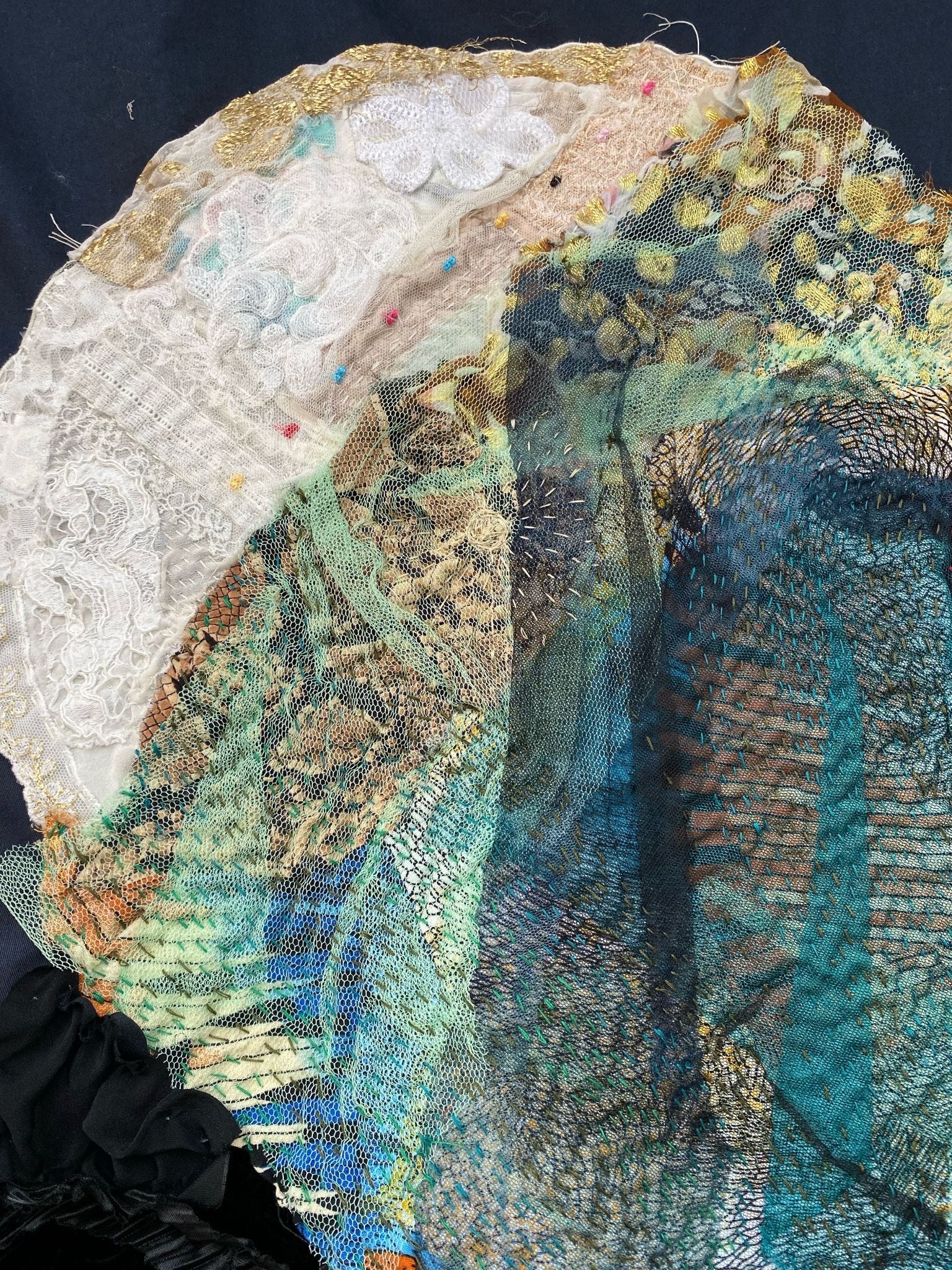
JM: I want to start off with the most simple elements and build from there. I often return to Japanese principles of wabi-sabi and visible repair. One of the first things I teach is a simple running stitch, inspired by the Boro tradition, a repetitive repair stitch. Traditionally, it’s even described with a specific scale, like the size of a grain of rice. It’s a very basic technique, but with it, you can both make an artwork and mend a damaged garment. That’s important to me conceptually, it feeds into sustainability and the idea that damage doesn’t need to be hidden, that repair can be visible and beautiful.
From there, we layer in more, different stitches, different ways of using them, introducing fabrics, and playing with layering and transparency. Often, when I’m in my studio, I pull lots of things out onto the floor and rifle through them until I find something that speaks to me, either because of the way it feels or because of the colour. I like people to embrace a similar sensory experience of choosing textiles and incorporating them into their work.
SK: Will participants be working with new materials or with fashion waste?
JM: It will all be fashion waste. I actually find that more fun. The variety is amazing, different colours, textures, fabric properties. In the final sessions, we might do a very simple weaving exercise, using a base fabric that participants slice into and then weave other textiles through. It’s a way of making a new textile, and it’s also a very tangible way to understand warp and weft, how cloth is traditionally constructed.
SK: Where do you source your materials?
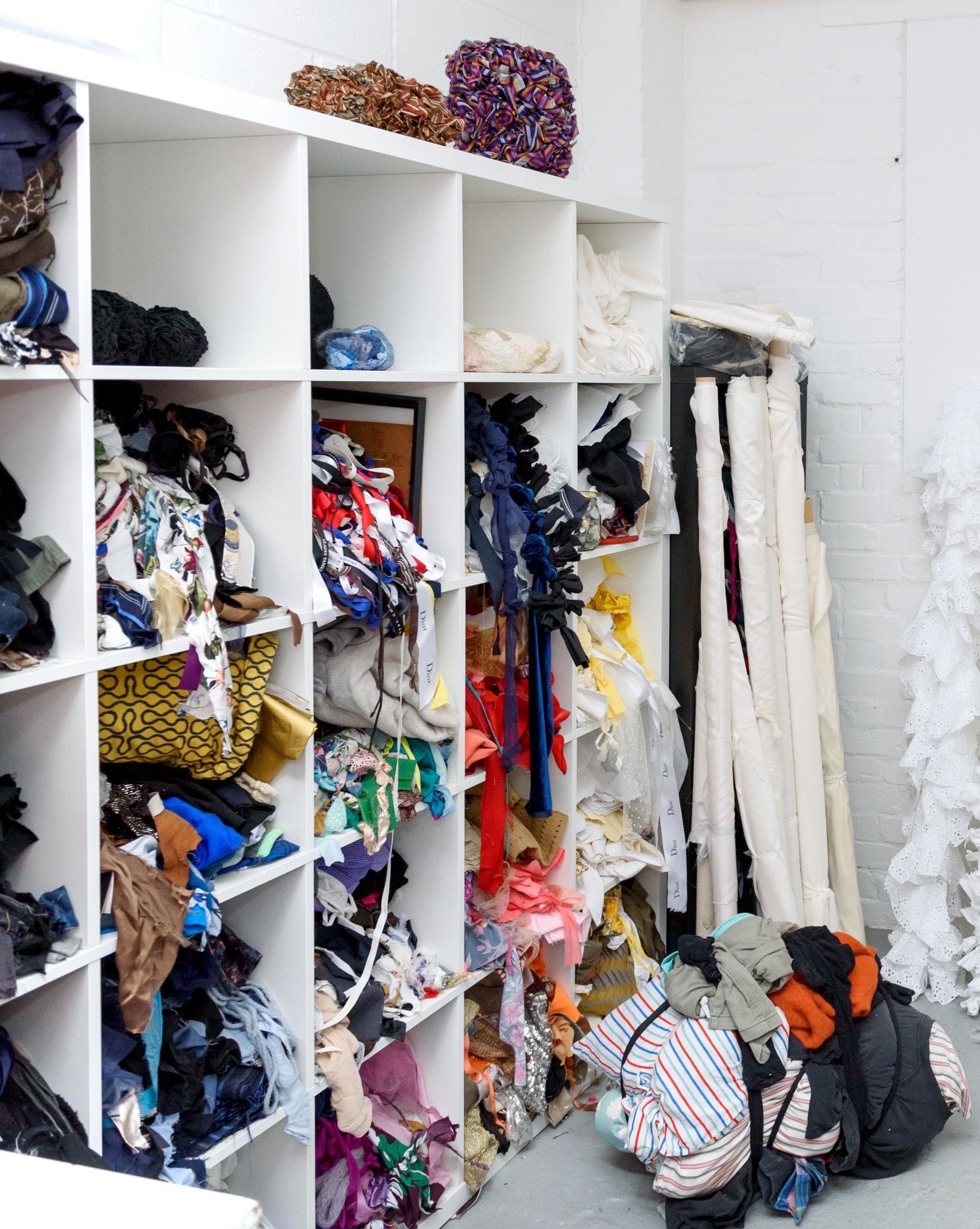
JM: Some of them come from alteration services. Through my fashion work, I know the woman who runs the studio doing alterations for houses like Chanel and Dior. I’m like her recycling service, haha. I collect bin liners full of textile offcuts that she would otherwise eventually have to throw away. She hates wasting them because they’re beautiful fabrics, but they’re just the bits cut off hems, cuffs, etc. So I end up with these odd shapes and sizes in all sorts of colours and textures. It’s a discovery process for me too, every bag is a surprise!
SK: How do you like to set up the space for a workshop?
JM: It would be nice to have a big central table piled with materials. If we can arrange the room in a circle around that table, it makes it easy for everyone to see and reach things. It also encourages people to get up, move around, and engage physically with the textiles. I often say the material ‘tells me what it wants to be.’ Sometimes I pull out a piece and immediately have a strong instinct about how it should be used, even if I can’t explain why. I like inviting participants to follow that kind of instinct as well.
I usually bring small textile samplers or experimental pieces from my own practice. They’re easy to pass around and handle, so people can see different approaches, textures, and techniques.
SK: You also mentioned using Japanese concepts of visible repair as inspiration. How does that come into the workshop?
JM: I want to show an image of a Japanese kimono covered in visible mending. Obviously not my work, but it’s a great way to introduce the theme of the workshop: that mending can be celebrated rather than hidden. That metaphor resonates a lot with my journey. My artistic practice began as a kind of therapy, it was never meant to be seen publicly. Showing the work now can feel very vulnerable because it’s so personal. I often say that in making the work, I remake myself. If, through a workshop, even one person experiences a sense of calm, joy, or self-understanding, or simply relishes the sensory play of textiles, then that feels really meaningful!