
Mapping Recipes for "Slow Disasters" in the Lynedoch Valley
The exhibition and public activation "Food for Landscapes" at Design Week South Africa marked the South African launch of our "Slow Disasters" project.


During Design Week South Africa (23–26 October), Food for Landscapes: Recipes for Slow Disasters unfolded in Cape Town as an exhibition and meeting point for thinking, tasting, and talking about how landscapes and people might heal. The project marks the first South African activation of a long-term, multi-continental project and methodology by British artist Andrew Merritt, which uses art, food, and ecological research to address “slow disasters”—a term coined by Merritt to describe the long-term destruction of landscapes and their bioculture.
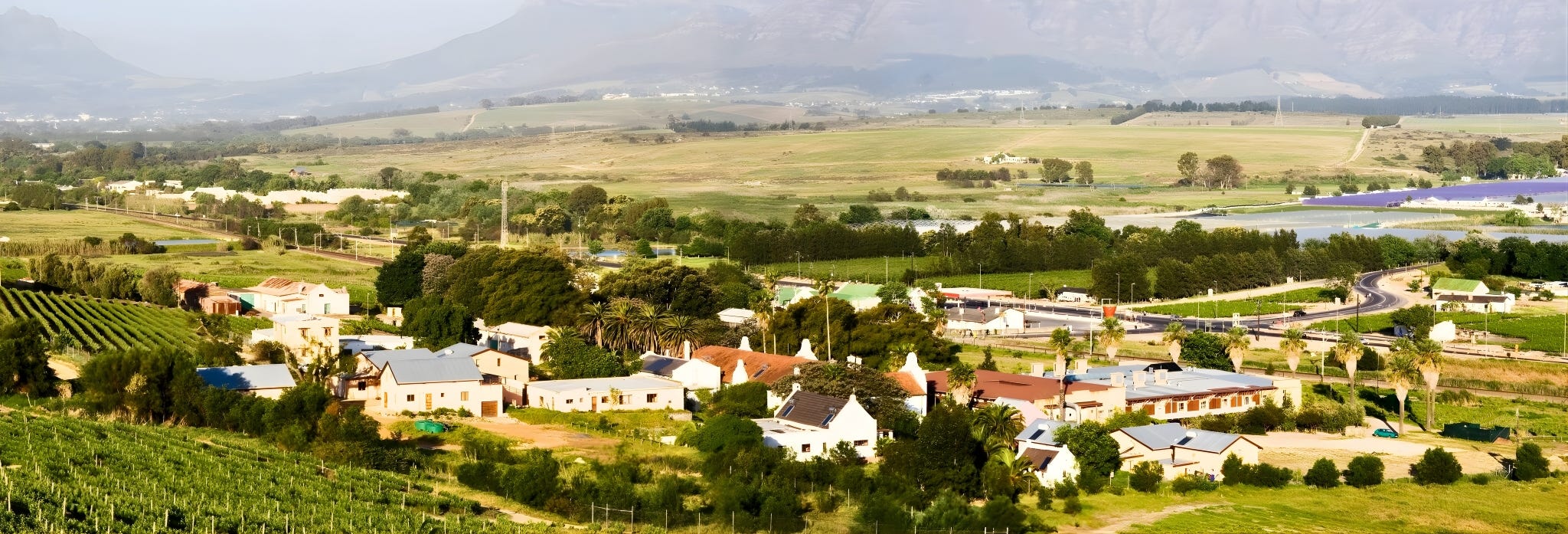
The South African component is developed locally with wild food expert Loubie Rusch of the Local WILD Food Hub and the Sustainability Institute in the Lynedoch Valley. This geographical region, part of the Cape Floristic Region, is globally recognised as the smallest yet most biodiverse hotspot on the planet. Yet, due to centuries of colonial land use and development, it faces severe degradation, making it a critical site to examine the impact of historical injustices on ecology and community.
Over centuries, Indigenous and pastoralist communities have been displaced, biodiversity has been eroded, and the valley has been transformed by vineyards, infrastructure, and uneven patterns of land ownership. Through this lens, the project asks how historical processes of colonisation, agriculture, and labour have not only damaged ecosystems but also severed local communities from ancestral food knowledge and from the land itself.
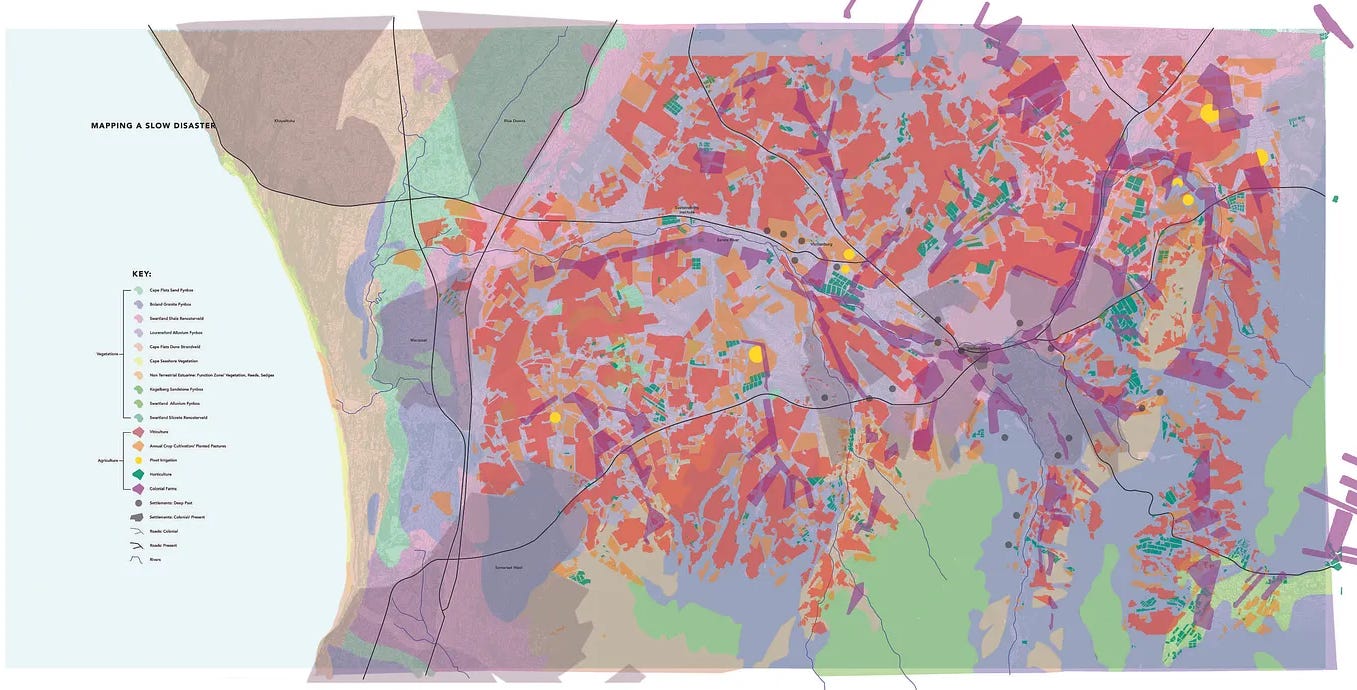
To make this long history tangible, Merritt developed a series of four maps of the Lynedoch Valley, each representing a different period in time: the deep past, early colonial settlement, the present, and an imagined near future. Drawing on ecological data, historic maps and documents, botanical research, and local knowledge, these maps reveal how land use has shifted from biodiverse commons to fenced, fragmented, and highly cultivated terrain. Each era is paired with tasting samples and specially packaged foods that Rusch selected to reflect the plants and dishes linked to that period, from wild, indigenous Cape foods to recipes shaped by enslaved communities and contemporary industrial diets. Together, the maps and foods allow participants to literally taste the changing relationship between food and landscape.
The project unfolded through a series of events in and around Cape Town during Design Week South Africa 2025, supported by the British Council, Design Week South Africa, and the Centre of Excellence in Food Security. It began with a public talk at Kirstenbosch Botanical Garden, hosted by the indigenous nursery and botanical studio Happy by Nature. Here, Merritt and Rusch introduced the methodology, the idea of slow disasters, and the specific social and ecological history of the Lynedoch Valley, within a programme that included traditional opening rituals led by local healers.
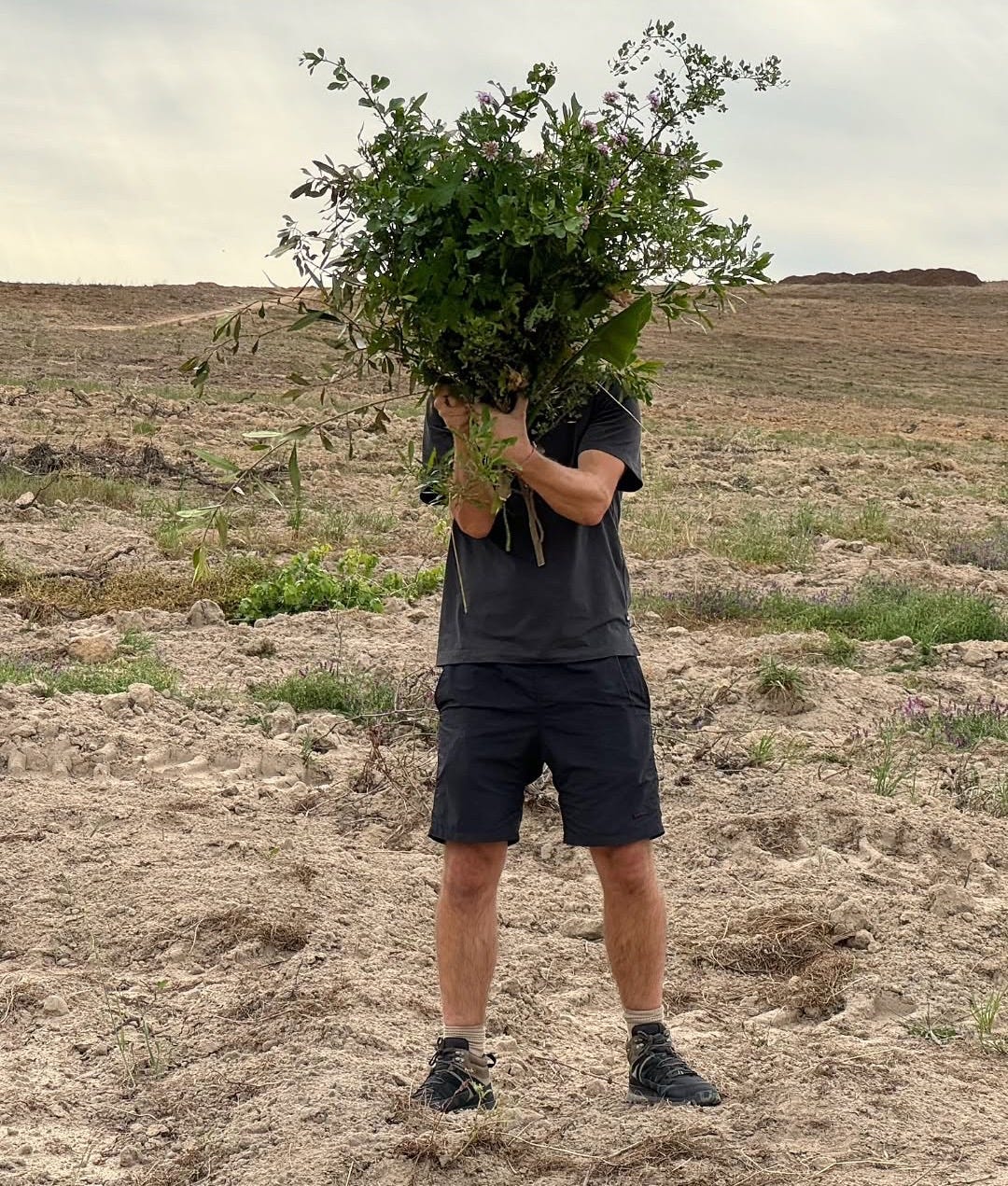
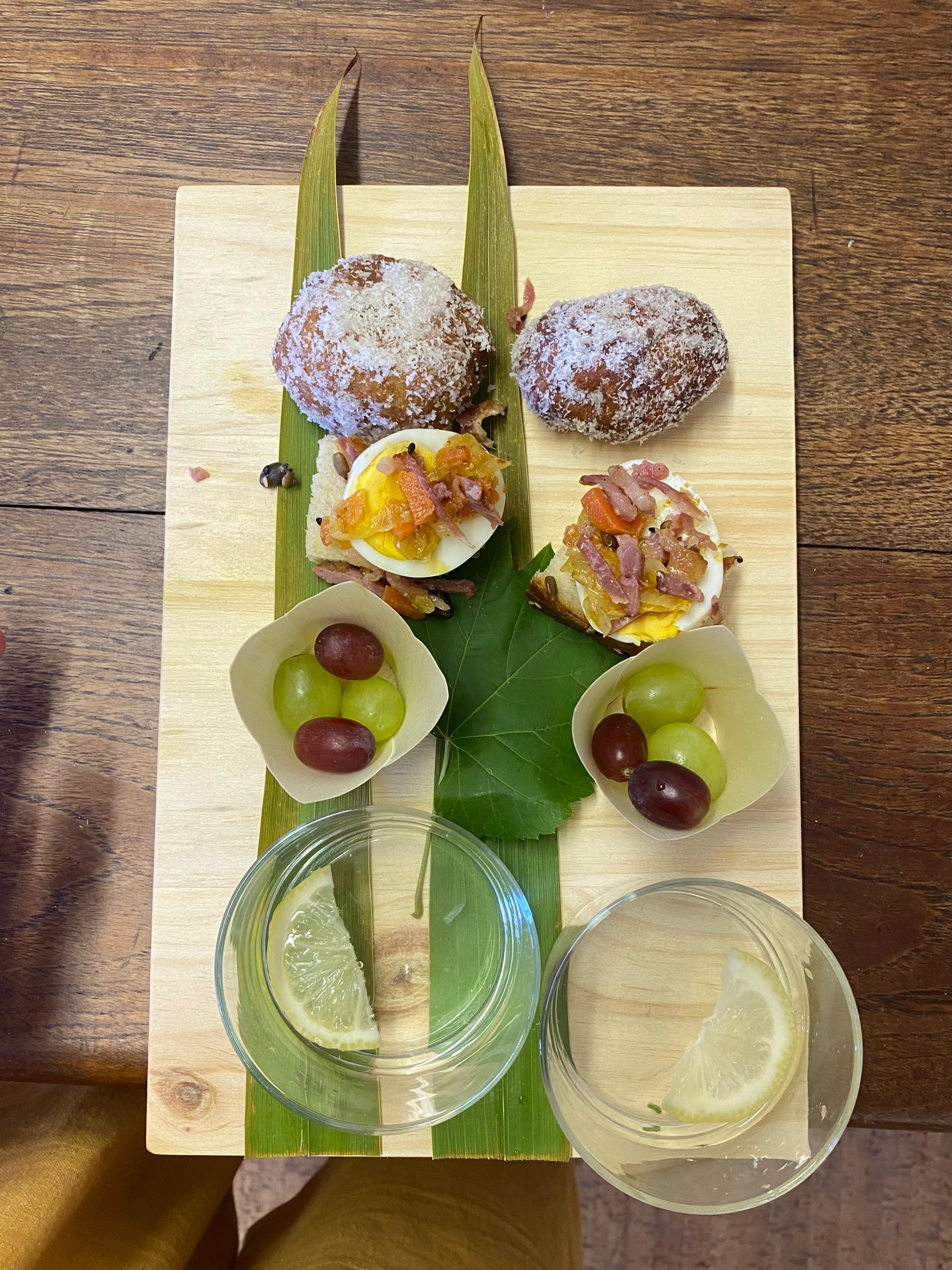
A more in-depth activation followed at the Sustainability Institute in Lynedoch, where a diverse group of local participants, including farm and domestic workers, community kitchen organisers, local activists, researchers, and farmers, gathered around the four maps. Moving through each era, they listened to the valley’s layered histories, shared personal experiences, tasted dishes linked to different periods, and discussed how land, labour, and food systems have changed over time. On the final “near future” map, participants drew and wrote their own “recipes for repair”: possible interventions ranging from community gardens and shared kitchens to spaces for children and plants to thrive. These contributions, along with recorded reflections, now form an emergent archive for the project’s next steps.
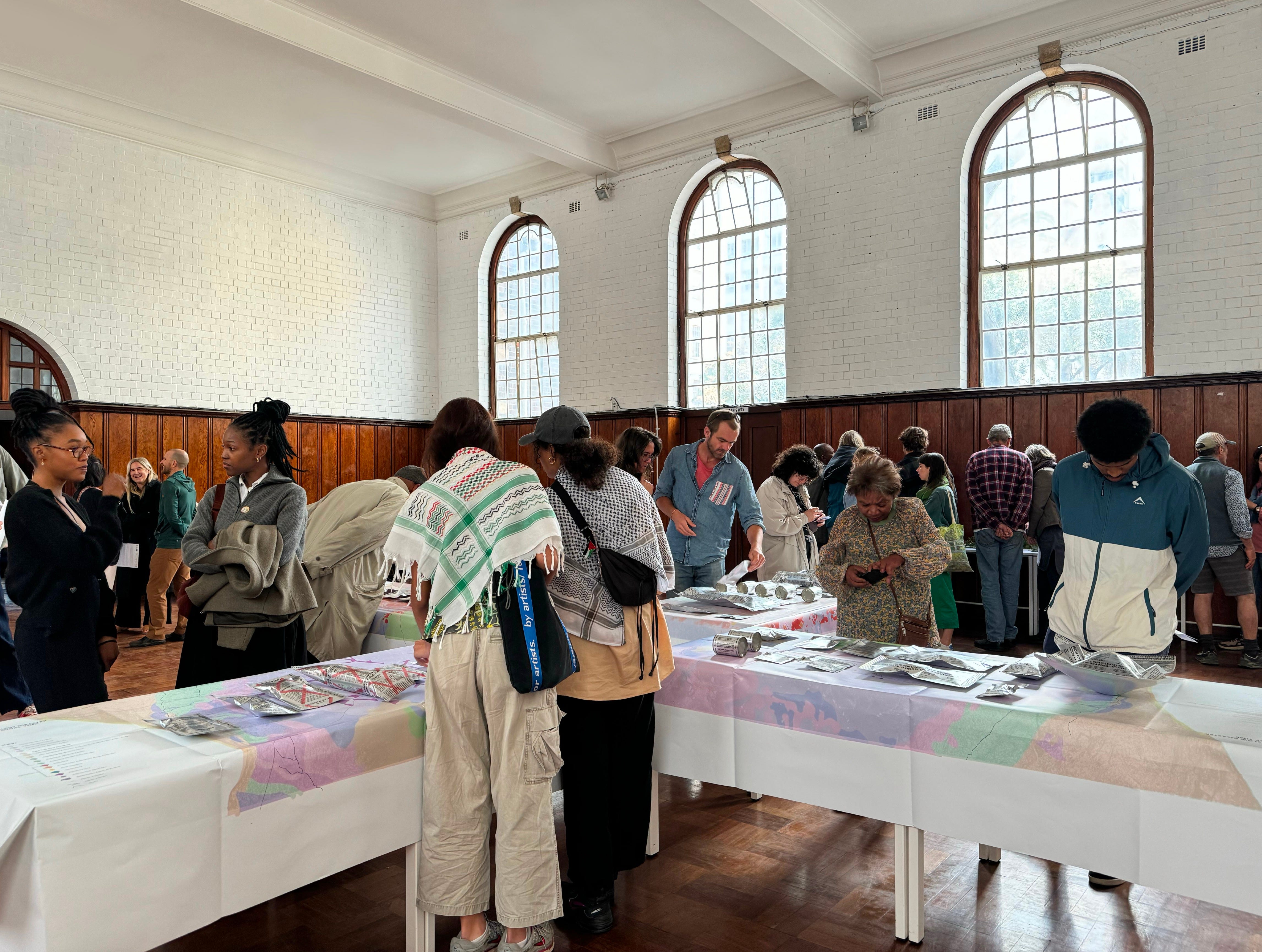
A final installation was then presented at Church House. The exhibition brought together the maps, hand-crafted “disaster-style” food packaging, visual documentation from the valley, and a display of indigenous plants and ingredients that can be reintroduced into local food systems. On the final day, Merritt, Rusch, and several participants from Lynedoch hosted a public interactive session, inviting visitors to taste selected flavours, engage with the maps, and reflect on questions such as: What food does the landscape need? and How can shared acts of making and eating help repair broken relationships between people and place?
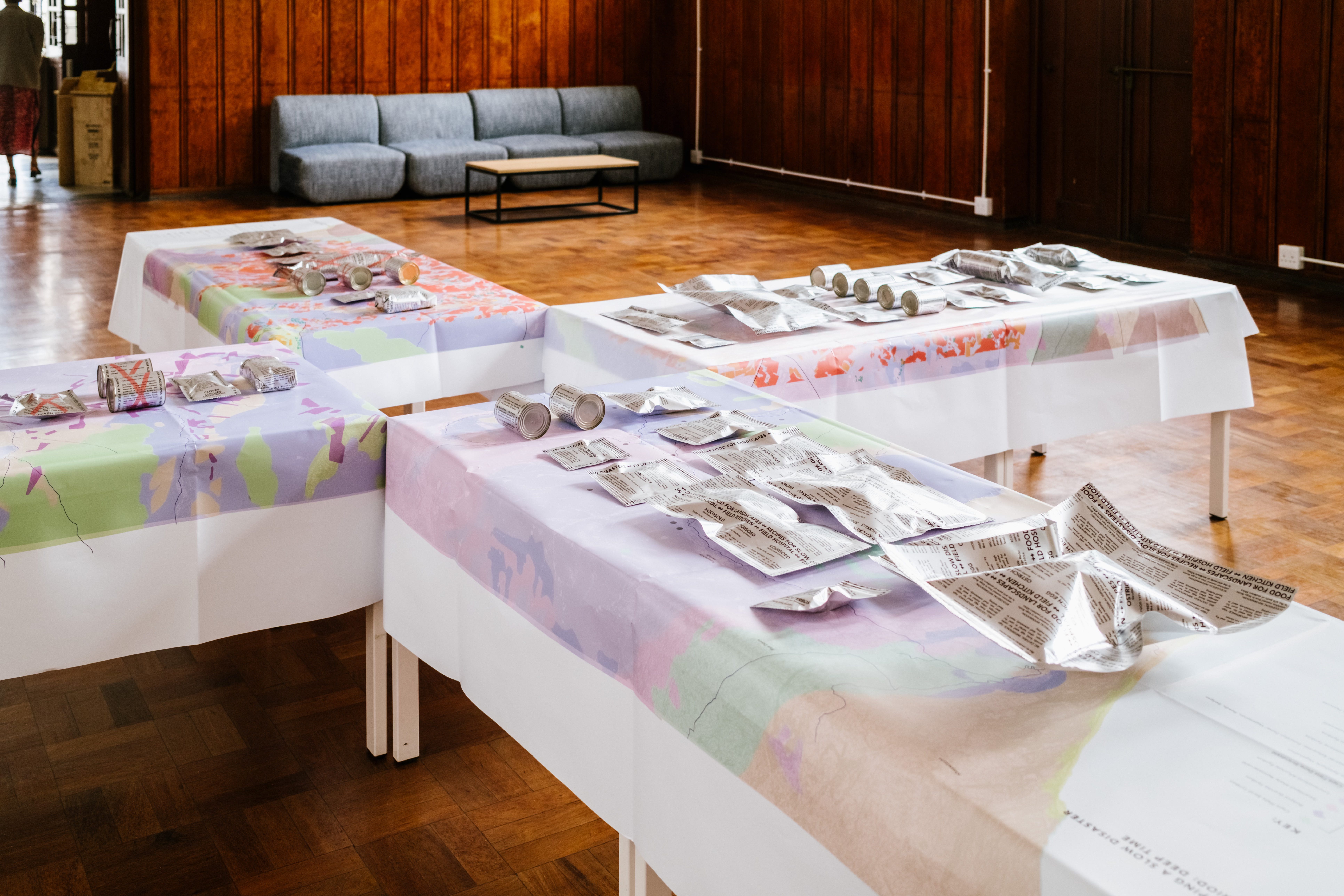
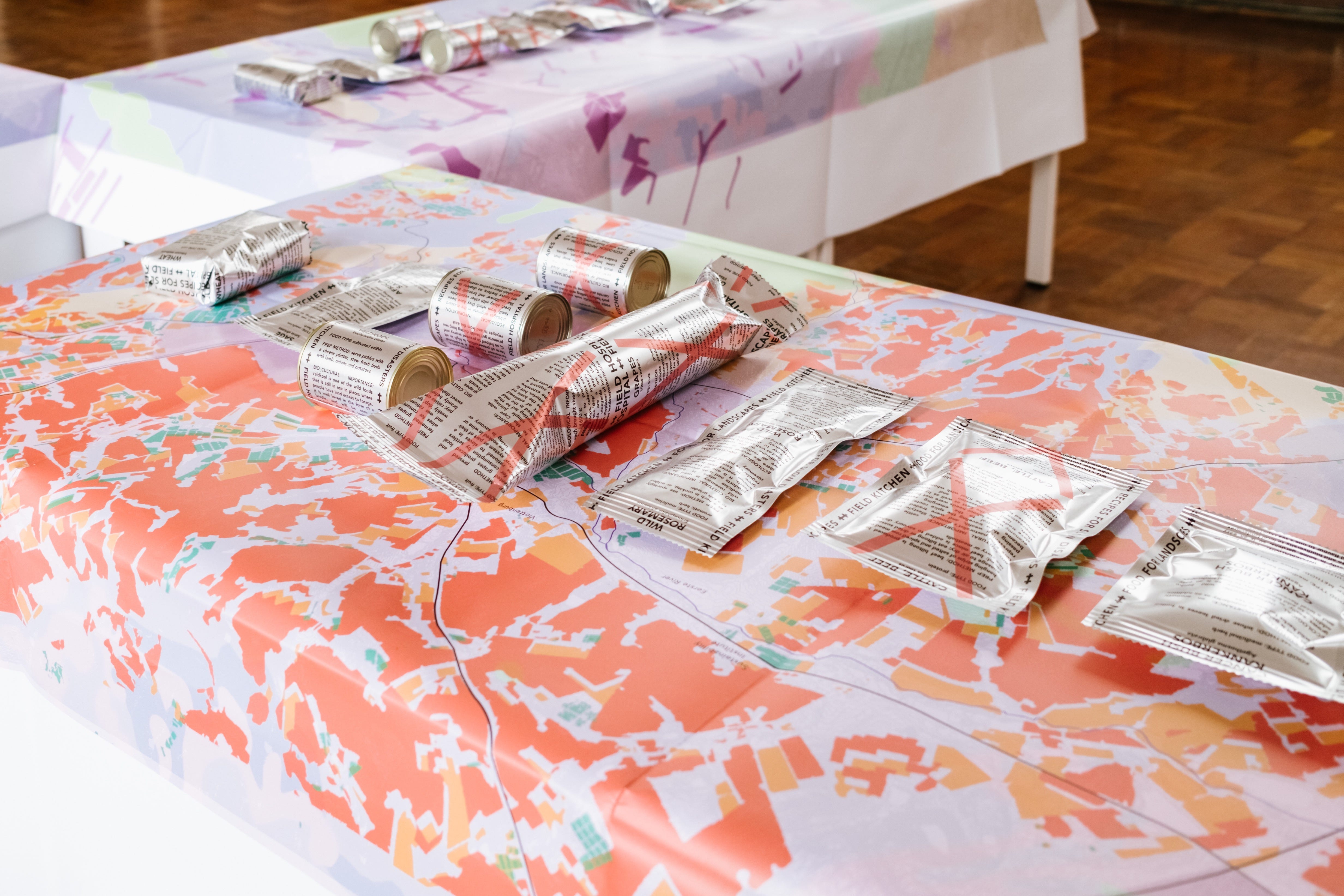
Food for Landscapes: Recipes for Slow Disasters marks the beginning of a long-term engagement in the Lynedoch Valley. Rather than outlining fixed outcomes, the project opens a shared, exploratory space to listen, cook, experiment, and, alongside local communities, discover what forms of ecological repair and collective nourishment truly matter to the people who live with the landscape every day.
Slow Disasters is a project initiated by Andrew Merritt and produced by Looking Forward. The initial implementations of the project are realised in partnership with the University of Cambridge (UK), Local WILD Food Hub at The Sustainability Institute (SA), Cocina Colaboratorio at UNAM National Autonomous University of Mexico (MX), and the British School of Rome (IT), with the support of Fundación Jumex Arte Contemporáneo and Gaia Art Foundation.
Food for Landscapes: Recipes for Slow Disasters was supported by the British Council, Design Week South Africa, and the Centre of Excellence in Food Security, and hosted at Church House, Cape Town.
 | A guest post by
|