
Weaving Neurodivergence, Textiles, and Community: A Conversation with artist-facilitator Kim Chin
Neurodivergence, interdisciplinary practice, and the importance of group pieces and intergenerational spaces in an increasingly isolating world.


Kim Chin is a neurodivergent artist, maker, and educator of mixed heritage who approaches creativity as a tool for reflection, resilience-building, empowerment, imagination, and connection. Their practice encourages curiosity through a range of textile techniques, including 3D fabric collage and wrapping, braiding and couching embroidery, natural-dye mark-making, and weaving with words. They are a facilitator of Looking Forward’s community engagement programme Soft Ground, hosted at SET Social Peckam every Friday, 2 to 4 pm.

Sylvia Keck: How would you define your practice in your own terms?
Kim Chin: I would say my practice is interdisciplinary, with an overarching decolonial thread running through everything I do. I typically work with textiles, printmaking, and natural dyes in order to minimise material waste. Much of my work takes place in public and collective settings, such as workshops and gatherings.
I approach my practice through questions of intersectional identity and heritage, particularly ideas of collective care and seeing yourself in others, which come from Philippine culture, as well as influences from other Southeast Asian practices, such as those in Indonesia.
SK: On your website, you describe yourself as a curator and artist with multiple roles – among them disability justice. Soft Ground is open to everyone, but we also focus on neurodiverse adults, because there isn’t much out there for this community. How do you integrate disability justice into your artistic approach?
KC: My whole practice is now filtered through the lens of disability justice and neurodivergence. I was diagnosed with ADD in my late 30s, and that really reframed my entire past — how I communicated, how I handled stress, and why I struggled in certain environments. I’ve always had a high capacity for productivity and can juggle a lot of ideas at once, but that can come at the cost of burnout and friction with systems that expect linear ways of working.
In my last job, I was Design Director for textiles and colour at a fashion and interiors brand in the US, managing a team of about ten people across multiple labels. I loved the collaborative side — helping people grow and bouncing ideas around with others of different expertise. But it was also a system where productivity was constantly extracted and measured.
When I left and started my own home brand back in London, the pace changed completely. You sit with the same idea for longer, and it becomes closely associated with you and your aesthetic. Before, I was so used to chopping and changing, constantly responding to different things, so it meant tuning into the way my brain works. I realised my process was more like a spiral — setting myself different projects across the mediums I enjoy working in.
The curatorial and producing side of my practice is very much led by community organising. I also do community projects and create textile pieces that have been touched by many hands, so I love inviting people to showcase their work. It’s very much about creating a platform rather than focusing solely on the end product.
Being back in London with this refractor lens meant having stability in routine and location, and being closer to people who can support you. Many of the peers I lean on are either diagnosed with or have traits of behaviour that mirror similar patterns, including a spirit of generosity. Because of that, we can catch ourselves when we get distracted or overwhelmed and become more attuned to how each of us works, fostering collaboration in ways previous environments did not nurture.
Working with producers, smaller galleries, museums, and educational spaces has also deepened my collaborative practice, helping me better understand how to communicate with groups with diverse learning styles and experiences.
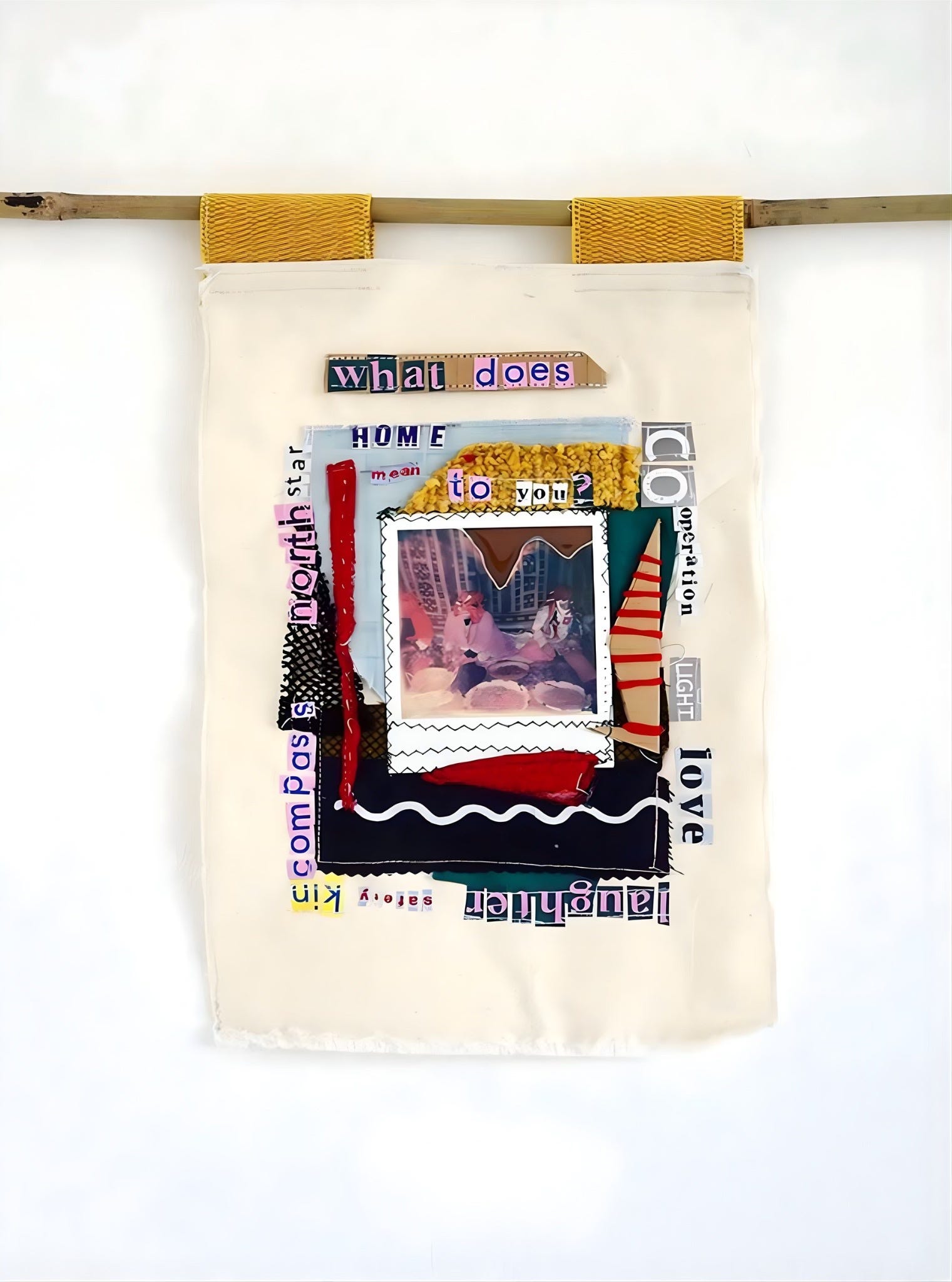
SK: Many creative people are neurodivergent, and there’s a growing conversation about neurodivergent aesthetics in fields like film, art, and textiles. Would you say that this shows up in your work?
KC: It’s interesting you mention film, because I’ve repeatedly found myself returning to film and photography. I just came back from the Philippines, where I made a group of short films for a group show. On reflection, every major presentation in my education involved some kind of moving image or montage. During my BA in Textile Design, I worked with Super 8 film, and during my MA in Cultural Curation and Criticism, I created a documentary-style photo montage as a publication.
I take a lot of photos because I don’t always retain details otherwise. As my practice carries a zero-waste ethos, I’m practising being more intentional — not just about what I document, but also about how I edit and delete. My time as a design director really taught me how powerful editing is.
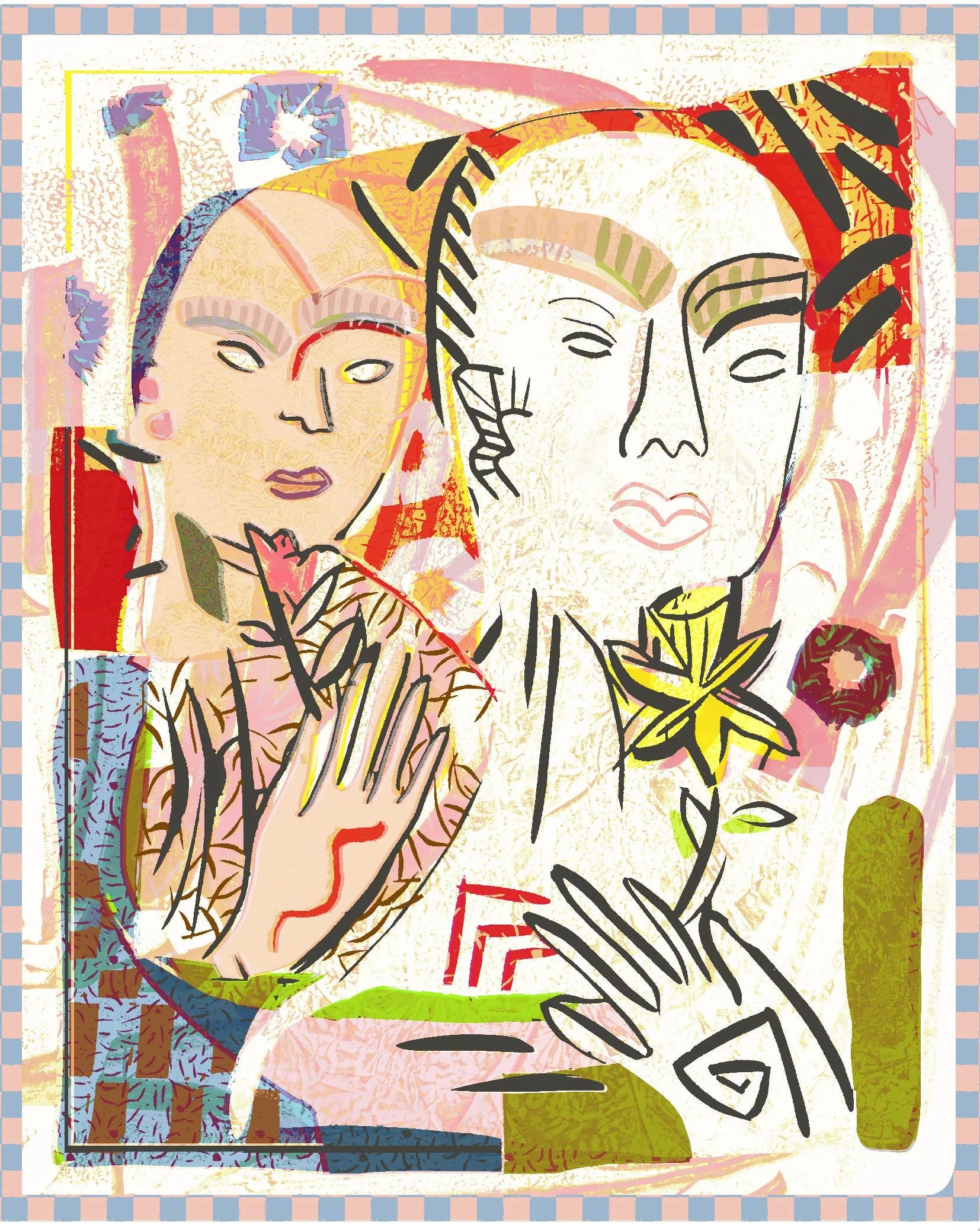
Often, I’ve received feedback on project proposals that the scope is ambitious. Capability isn’t so much the question as capacity and room for things outside of your control happening. These pressured deadlines push motivation - the important thing is leaning into what works for you and why, while also being aware of what might hinder the process. The real work is being honest about how my brain works and setting up structures that support that, rather than constantly punishing it.
As a workshop facilitator, for instance, I identify core workshop formats and themes that can be adapted and evolved, which means that I can expand time to develop new ideas. Collaborating with inspiring people and a purpose leads to themes that constantly spark ideas.
Lately, I’ve been thinking beyond decolonial and toward an anti-colonial stance: returning to basics, focusing on food waste as a dye source, weaving in embodiment, grace, and tools for grounding when things feel overwhelming.
I’m also learning how to say no, which is very important — especially as a freelancer, where livelihood can feel precarious. I come from a background where I always had a 9-to-5 job, with holiday pay and team structures that, despite capitalism, did offer certain forms of support and benefits. But it just wasn’t satisfying.
Now I find myself asking: which parts of those structures were actually helpful, and how can I carry them into a more community-rooted, anti-capitalist practice?
SK: How does your workshop practice relate to your individual art practice? Do they feel separate, or do they feed into each other?
KC: They’re very intertwined. A big learning for me, after putting a name to ADD, was letting go of the idea that certain things in my childhood hadn’t happened properly because of misunderstanding. Being able to name it allowed me to reframe my childhood and adolescence - to let go of the narrative that I had somehow failed at certain things. That’s a profound shift, and it shapes how I hold space for others.
For many neurodivergent friends I have, time isn’t always experienced as a linear concept; it’s often led more by how we feel. Those traditional milestones - career ladders, family timelines - don’t really apply. Instead, life can move in cycles or pulses, guided by what your body feels is right and how attuned you are to that.
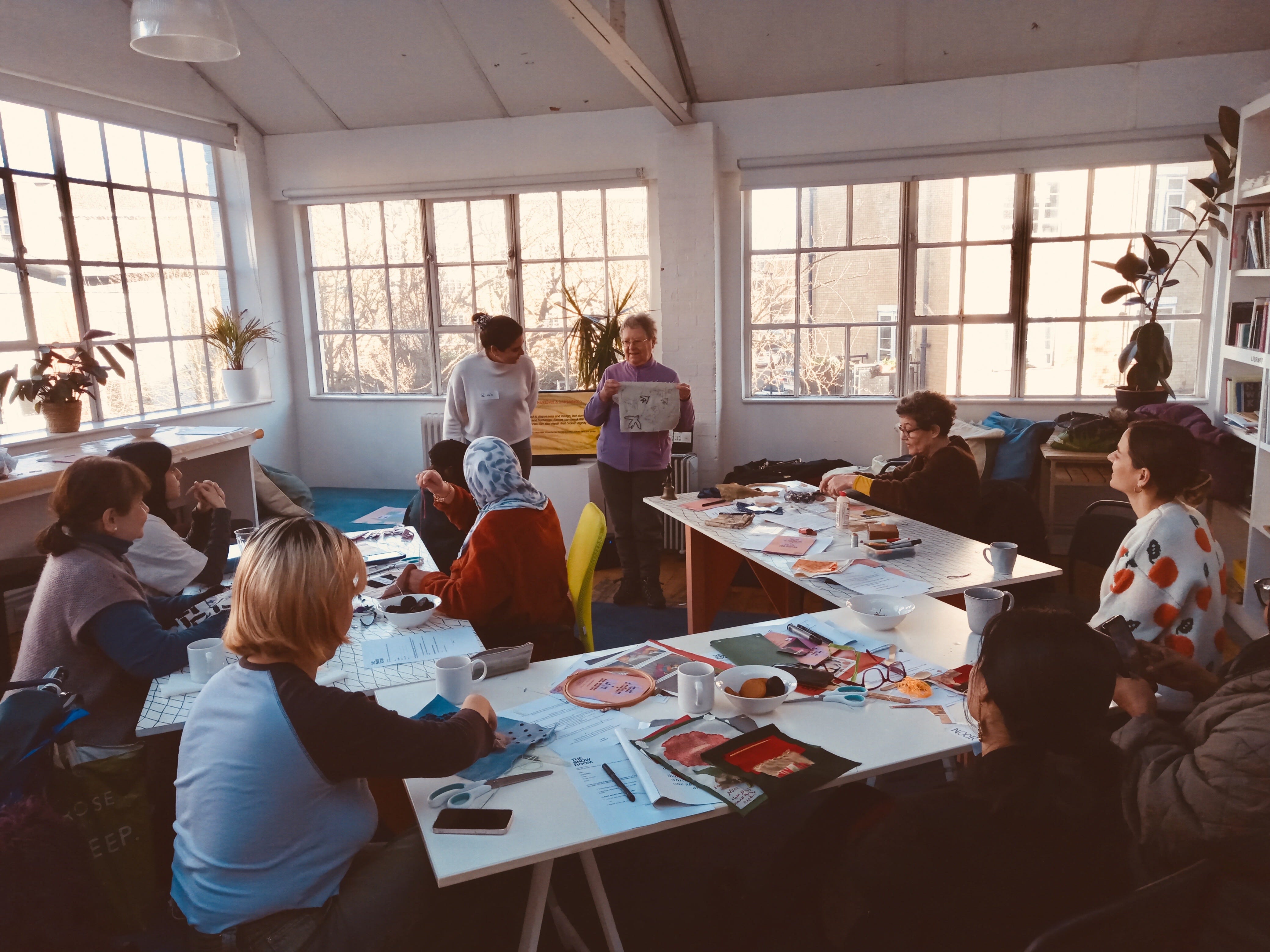
I think of my workshops as sites of transformation and healing. Textiles, in particular, are something that have been present in my family, and they’re also known for their calming qualities. Repetitive actions contribute to lowering blood pressure, support concentration while allowing conversation to flow — it’s a wonderful activity to do socially. For neurodivergent people, there’s also the idea of body doubling: being more productive or regulated by working alongside others.
What feels really rewarding is witnessing people who don’t usually have the time to be creative or connect with others finding a space where they can do that. There are different iterations of the workshops depending on the context. I also facilitate within organising and activist spaces, where people are often used to prioritising other people’s needs first. In those environments, I try to integrate small embodied practices that help everyone arrive in the room together.
All of these outputs are really tools or modes that people can take into their own daily lives. There’s no aesthetic outcome required.
That’s quite different from my background in design, where ideas had to be sold to a public and measured against certain standards, often supported by large teams. Now I allow myself to take much longer on projects, whether they are art or object-based. My schedule is guided much more by felt connection than by external deadlines whenever possible. Slowing down has helped me feel more grounded and has allowed me to build a sense of purpose and community again in London. In that way, the relationship between my workshops and my practice is really reciprocal — they support and inform each other.
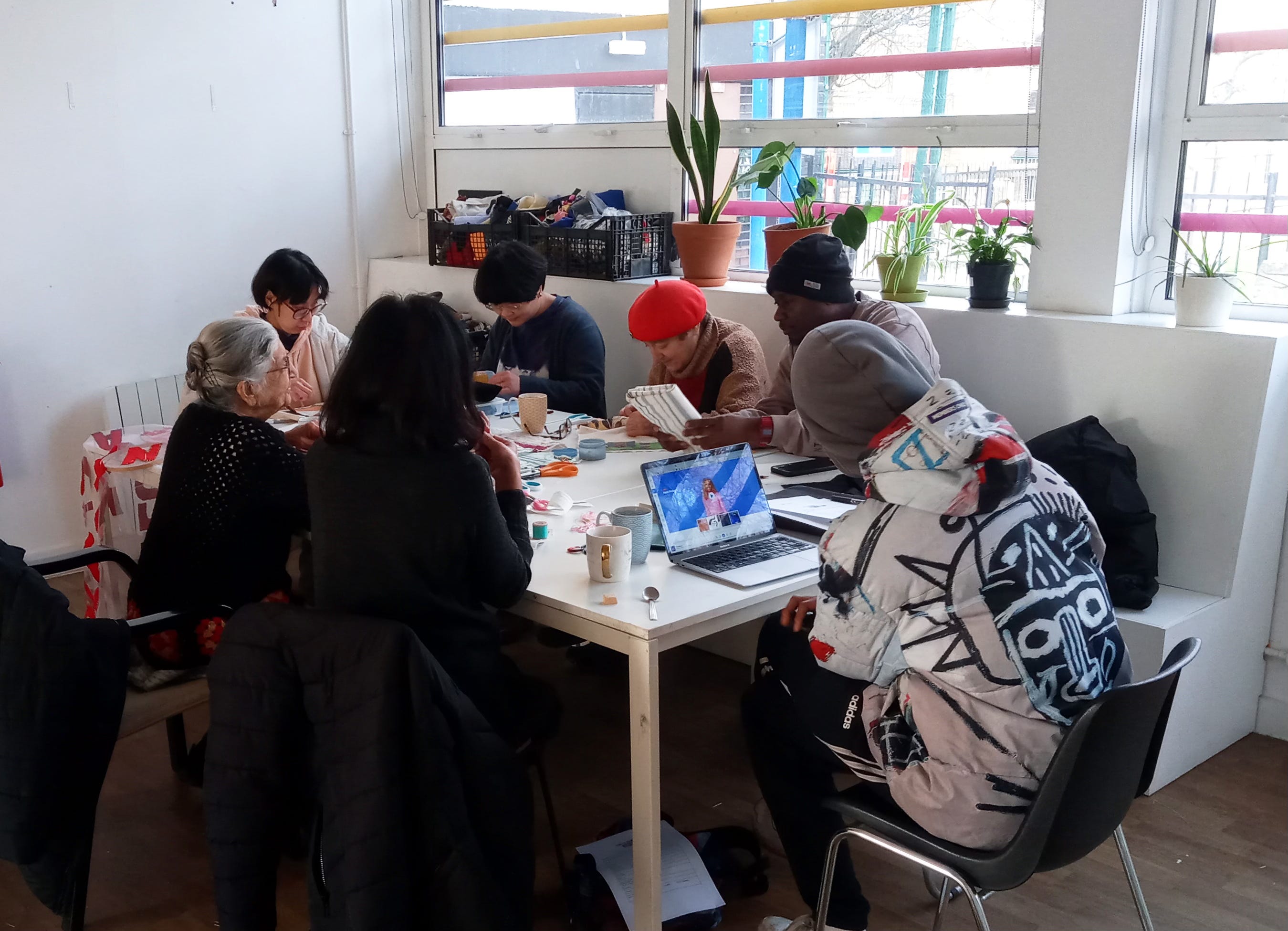
SK: What I love about your workshop practice is that you often create group pieces. I think that’s such a great idea, because in my experience, participants can sometimes feel intimidated about making something that looks perfect.
KC: One ongoing project is Stitch Social, a community group I started nearly two years ago while I was part of a collective and doing a residency. One of the main reasons I wanted to begin hosting community workshops was to ground myself in the local area. I was also thinking about questions of legacy: what sustainable impact can we leave in a community once we move on from a space?
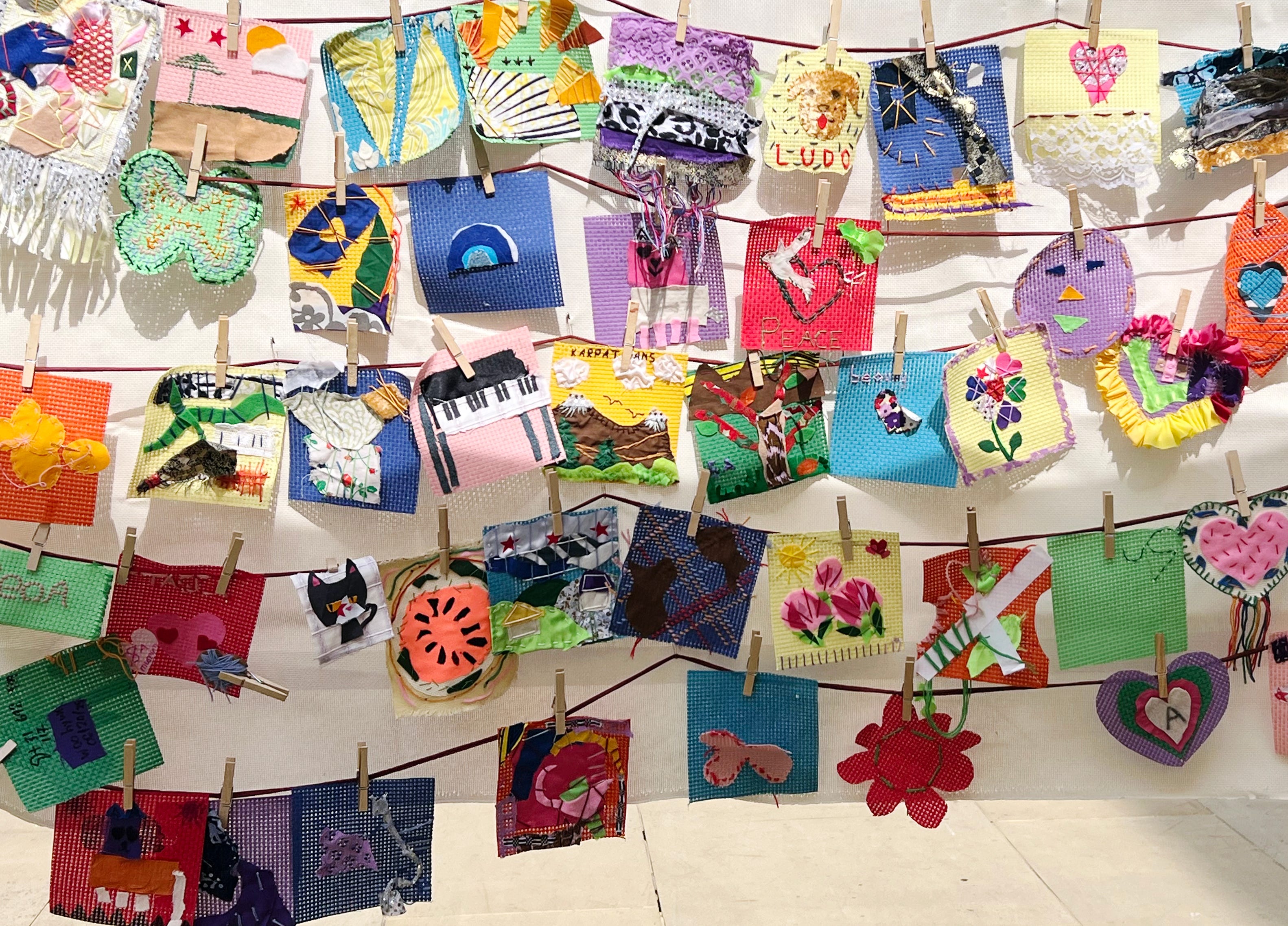
At first, we experimented with people taking home their own pieces, but what really resonated was creating a shared tool for the community: a stitched alphabet that can be used for banners, bunting, and communal celebrations. What’s lovely is that people can start a letter and keep adding to it over several weeks, or leave it for someone else to continue and move on to a new one. As a result, many of the letters have been touched by multiple people. It’s been amazing to see participants grow in confidence, recognise their own skills, and feel connected to something larger than themselves.
We use upcycled materials — donations from the group and offcuts from interior companies. It feels very nourishing, and it’s also a response to the excesses of the fashion industry. In an age of hyper-technology and surveillance, it reminds us that there are already simple, human solutions to many of the problems we face.
SK: I feel like it’s so important to foster these kinds of spaces. The world we live in right now can feel quite lonely and isolating — it often encourages people to be alone and consume as much as possible just to get by.
KC: That’s actually why I run a lot of intergenerational workshops. There are so many skills and experiences that can be shared across generations, but our current systems tend to divide age groups.
I live with my octogenarian mum, and watching her navigate a world that has moved almost entirely online has really driven this home. She doesn’t want to manage her life through apps. She’s used to talking to people, visiting actual places, and engaging with human faces.
In our area, we’ve seen banks close, the local post office shut down, and basic services move to automated phone systems or apps. When I try to help her, I often end up on hold with the council or housing repairs for 30 minutes or more. These systems aren’t built with accessibility, age, or neurodivergence in mind — or really with supporting people in general — and that creates isolation.
It also creates frustration, and sometimes people are encouraged to direct that frustration toward others, which deepens social divides. So for me, these workshops become spaces where people can come together to realise they’re not the only ones going through these experiences. They become places where people can share frustrations without turning on each other, recognise that they’re not alone, and rebuild a small sense of collective agency.
SK: Lastly, would you like to tell us something about what you have planned for Soft Ground?
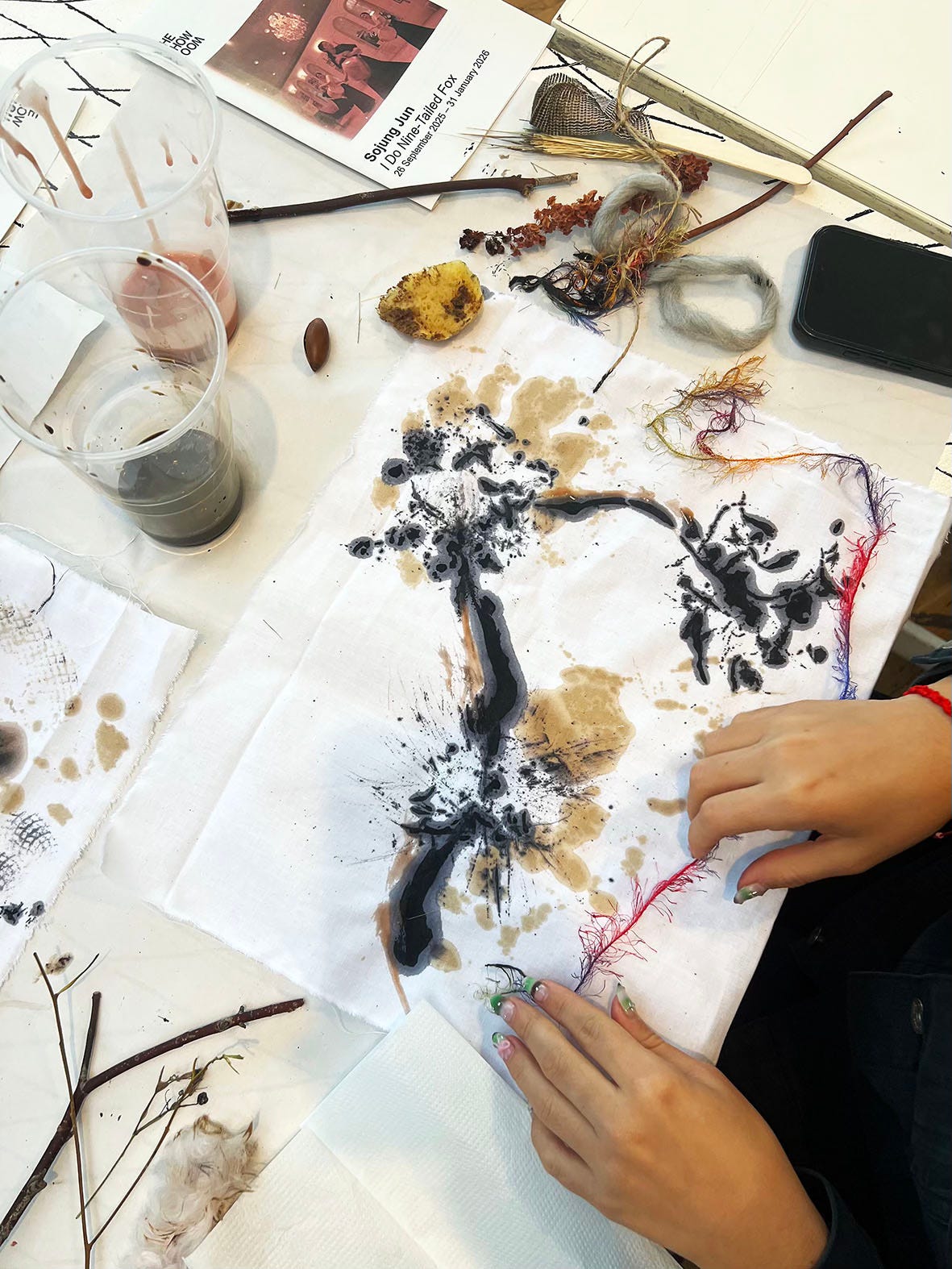
KC: In the spirit of switching things up, I’m going to model it a little on a programme I previously ran with The Showroom. We’ll explore four different textile-based activities, ranging from embroidery to natural printmaking or mark-making, as well as weaving and collage. I’m always open to feedback and will adapt the sessions based on how people respond. The idea is to offer a range of entry points so participants can engage in ways that feel comfortable for them — and hopefully we’ll have some fun!
The aim is to create multiple gateways into the practice: some people might prefer slow, detailed stitching, while others might enjoy more expansive or gestural mark-making. I’ll also weave in a few mindful prompts and themes to bring a bit more awareness into the process. Participation in that aspect is always optional — the materials are there for you, and you can engage in whatever way feels right.
Kim Sacay Chin is an interdisciplinary artist, textile designer and educator from London with Bisayan and Guandong-Jamaican roots. Kim is interested in examining cyclical and intergenerational patterns of time, place and memory through an embodied, anti-colonial and neuroinclusive lens. They are currently experimenting with natural dyes from food waste and organic matter, upcycled textiles and embroidery, mark-making, and film process to transform grief and burnout into a practice of mutual care, resilience building, and reframing an abundance mindset.
Alongside an ongoing community initiative Stitch Social, partnered with South Hampstead and Kilburn Community, they have delivered independent and collective projects in different cultural learning and community spaces, working with organisations such as Crafts Council, Coin Street Community Centre, Counterpoint Arts, Metroland Cultures, Migration Museum, Museum of the Home, V&A, Kakilang, esea Contemporary, The Showroom, and the National Festival of Making.
Sylvia Keck-Soler is Outreach Curator at Looking Forward, where she is curating the programme Soft Ground.